In 2015, we started exploring a different way to experience ecommerce. We wanted to imagine shopping as a place you could move through: a city with buildings, streets, trees and cars, where discovering a store became part of exploring the world around it.
We called the project Inside Town. It was an ambitious experiment, and we spent a lot of time working out how to turn that idea into something dynamic in the browser.
Imagining shopping as a city
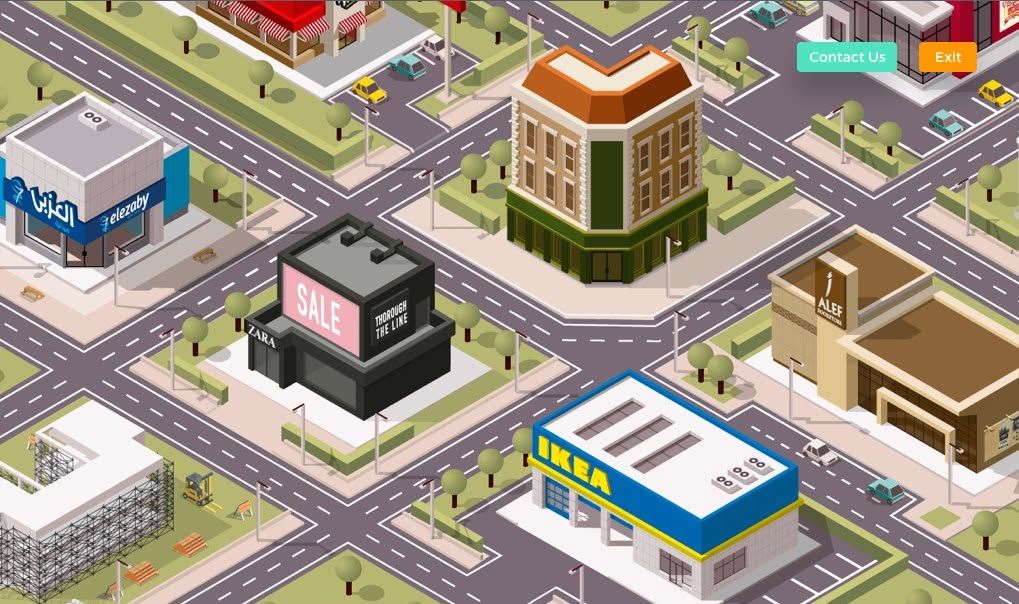
The city was the centre of the experience. Stores appeared as buildings within an isometric scene, connected by roads and surrounded by small details that gave the place character.
The concept let us think about a store as more than a logo or a product listing. It could have its own shape and presence in a shared environment. The buildings shown here were part of that exploration, rather than evidence of commercial partnerships.

Building a dynamic world with SVG
We chose SVG elements to build the city. The buildings and other pieces of the scene were elements we could work with individually, rather than a single flat image.
Working on this in 2015 felt very different from working with the tools available to us today. For the experience we were imagining, we had a lot to investigate and build ourselves.
We animated the trees, cars and other details to bring movement into the scene. Those small touches mattered to the idea: we wanted the city to feel alive as people explored it.
An editor for building the city
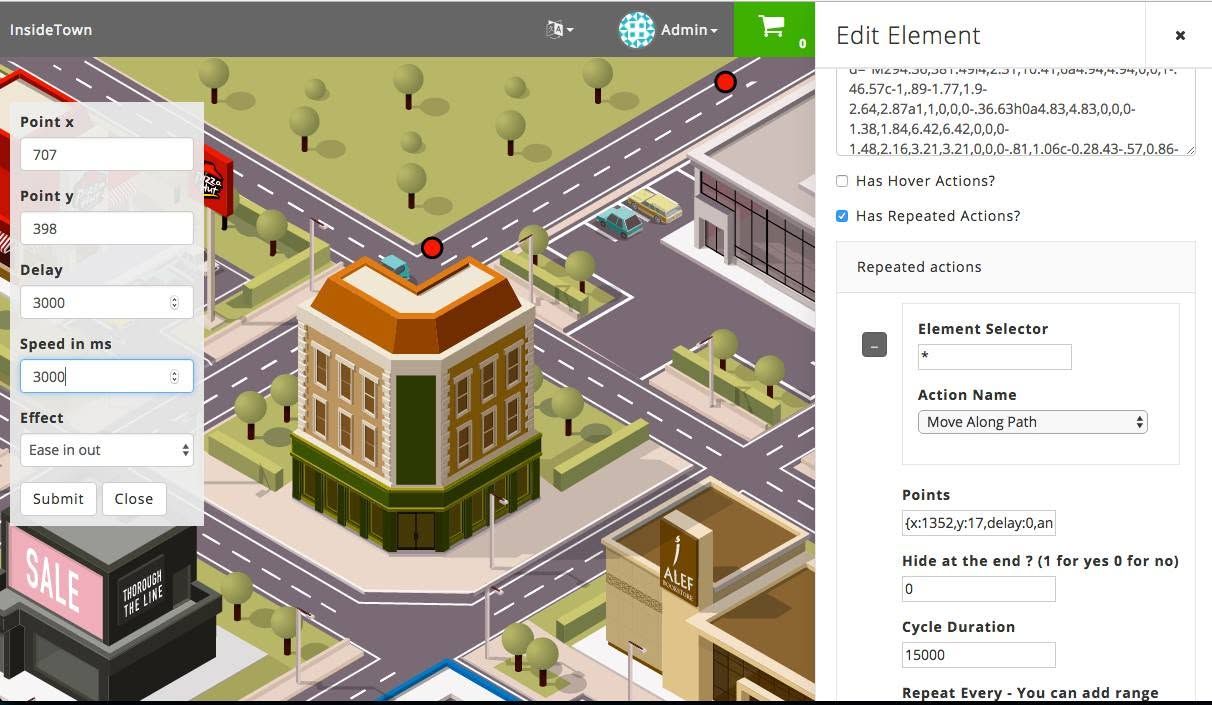
Alongside the city itself, we built a dashboard for creating and arranging it. We could add SVG buildings, then drag and drop them into position on the SVG city.
That meant we were working on two connected experiences: the world a visitor would explore, and the tools we needed to build that world.
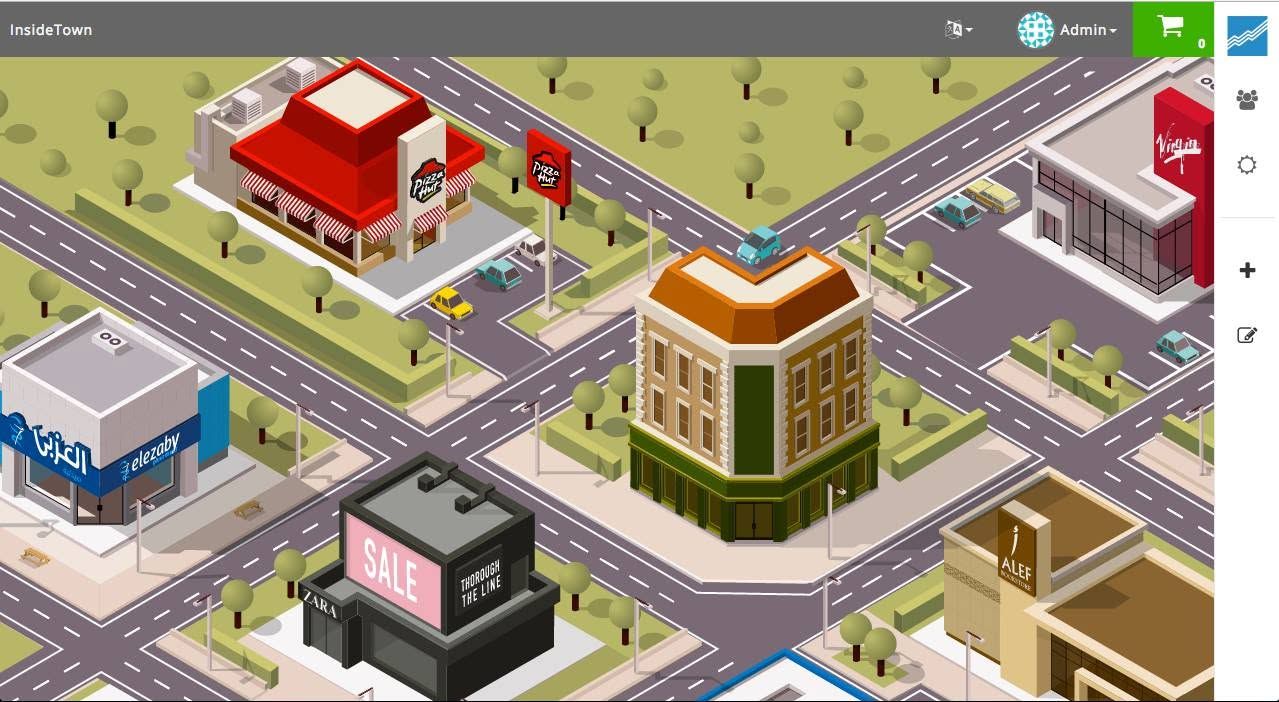
The editor also exposed animation settings. The saved screenshot shows controls for movement paths, timing and repeated actions. Building the scene involved deciding how its elements should behave as well as where they belonged.
Why we stopped development
As we continued, more challenges appeared. The project needed a longer period of investigation and investment than we could commit to, and we eventually decided to stop development.
There was still a lot to explore before the idea could become a complete ecommerce experience. The city and its editor were meaningful parts of the experiment, but there was more work ahead of us than the visuals alone could show.
What I remember about Inside Town
What stays with me is the ambition of the idea. We took something familiar—shopping online—and gave ourselves room to imagine how it might feel as an interactive place.
We built a dynamic SVG city, a dashboard for arranging buildings, and animation controls for bringing its details to life. Even though we stopped, it remains a project I enjoy looking back at: an exploration of how design and development can work together to create a different experience.