Life is full of experiments, lessons and painful mistakes. The important thing is to tell other people what happened so they can learn from it. We spent four years learning a lot about marketplaces through Tindio.com. I will try to sum it up here.
What we were trying to build
We started Tindio.com in April 2016. A lot of people in Egypt were making and selling great products, but hardly anyone knew about them. Every seller was somewhere different. Some used Facebook or Instagram. Some had a shop or their own website. If you were looking for a certain product, whether you lived inside or outside Egypt, finding it was not easy.
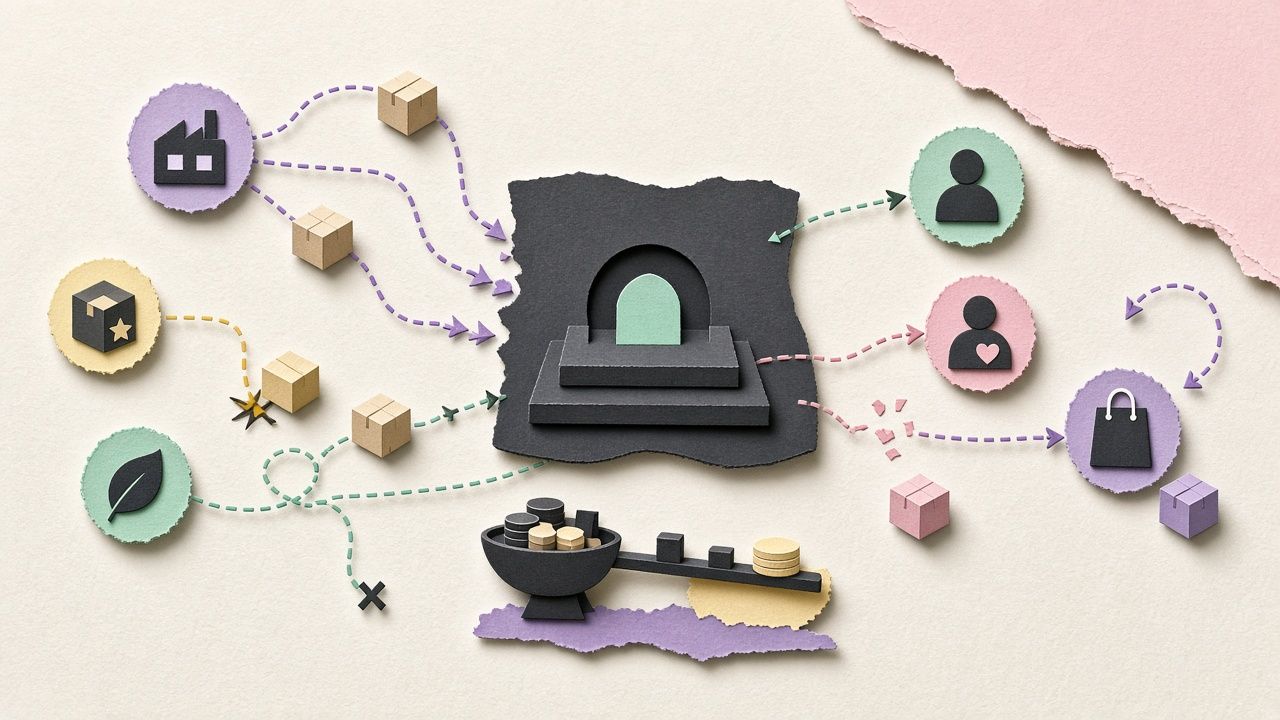
We wanted to bring those sellers together so Egyptian products could reach end users abroad. The dream was an open platform where anyone could create a store and upload products in minutes. We acted as the link between stores and customers. We collected each product from the seller, shipped it to the customer, collected the money and paid the seller. We kept a 15% commission.
Operations kept breaking
Seller and customer behaviour created daily problems. These are only a few examples.
- We ran a marketing campaign for one store and brought it more than 30 orders. All 30 were cancelled because the store had a death in the family.
- A customer ordered something for an event. The store promised to deliver before the date, then disappeared and stopped answering the phone. We had to cancel the order after the customer blamed us.
- A customer abroad prepaid 350 EGP for a product. When we asked the store to make it, the seller said the price was now 700 EGP and they had forgotten to update it.
- A customer ordered a natural leather wallet printed with their name or photo. The store made it, then the customer disappeared and never accepted delivery. We could not ask the store to take the loss, so we paid them. The custom wallet could not be sold again.
- We normally paid stores two weeks after an order so we could make sure the customer had no complaint. One seller shipped an order, called us the next day demanding the money, accused us of stealing it, said we had never explained the two-week wait and filed a police report.
- We took our 15% commission from an order. The seller said it was too much, called us just a website or a Facebook page and wanted to close the store. They ignored the fact that we spent several times that amount on marketing, operations and customer support.
This is less than 5% of the problems we handled every day. We changed shipping companies more than 25 times. Couriers lost or stole products. We paid a lot of compensation to both customers and stores.
The marketplace numbers did not work
Every day we tried different ways to bring orders to stores. We paid for social media ads, search ads and product promotion on other websites. Our average margin was about 30 EGP per order. Acquiring that order cost around 25 to 35 EGP before operations and customer support. Even after trying to cut acquisition costs as much as possible, we were losing money. We could not make the cost of an order lower than our margin.
We also thought easy seller onboarding would be an advantage. Designers and sellers could open a store in minutes with no contracts, signatures, paperwork or requirement to keep products in our warehouse. But because joining was so easy, many sellers did not value the store. They tried it, uploaded two or three products and disappeared. We ended up with many inactive stores.
Quality control was even harder. We had more than 700 stores and 8,000 products. Many products were made to order, so we could not inspect them in advance, and an open platform meant we had no warehouse. More than 60% of products reached customers with a reported problem. A wallet had a scratch. A necklace did not look like the photo. A T-shirt did not match the expected quality. A natural leather bag smelled bad.
When that happened, we returned the product from the customer to the store and paid shipping that already cost more than our margin. The customer was left with a bad impression of Tindio. We tried to explain that we were an intermediary, not the seller, but customers saw us as the storefront they bought from. It was almost impossible to convince them otherwise.
What I learned
Most stores did not want to leave their comfort zone on Facebook or Instagram. Even after major UX improvements made our dashboard easier, sellers did not want to use a system they were not used to. Products stayed out of stock. Prices stayed outdated. Convincing someone to use your system can be harder than building it.
Our biggest mistake as founders was believing technology could solve everything. We focused on building a good website, an easy interface and a good mobile app. We spent around seven months or more building before testing the business or making an MVP. Later we learned that technology was the smallest problem. We could have tested the idea with a website built in five minutes. Operations and the business model mattered much more. We also did not have a partner who understood business, and that cost us a lot.
We were fully available when we started. We did not understand that this kind of business only becomes profitable over the long term. After exactly one year, our energy was gone. We started taking jobs so we could keep funding the project. That helped us continue for four years without investment, but it slowed down our response to every problem. Raising external investment in the first year could have let us stay focused and solve those problems faster.
These are the main lessons I took from the experience.
- Ecommerce can be a very good business when you own the product, trust its quality and can deliver it quickly without problems.
- A marketplace is not the best model if you need short-term profit. Do not market or sell somebody else's product unless your margin covers the full cost. That is very hard to achieve.
- Handmade and custom products in Egypt can be a frustrating market, even though it includes many great makers. I would not recommend entering it unless you make the products yourself.
- Focus on the problem, business and operations before technology.
- Know whether your business should make money in the short or long term. If it needs short-term profit, try to earn from day one or you will not cover your expenses. We ignored our low margin and hoped more orders would eventually create profit. The ending became inevitable.
- What works in Europe or the United States may not work in Egypt or the Arab world, and the opposite is also true. User behaviour is different.
I am not avoiding responsibility or blaming the sellers or customers. I blame myself for not finding the right answers to these problems.
If I had read a post like this four years earlier, I would have learned from it and might have spent my time, effort and money on an idea that suited my abilities better. We saw each problem and kept trying to solve it, but the flow of new challenges was bigger than our ability to absorb them and bigger than the solutions we could deliver.
That does not mean nobody can succeed where we failed. If you have experience in a field, please share it. Someone else may learn from it.